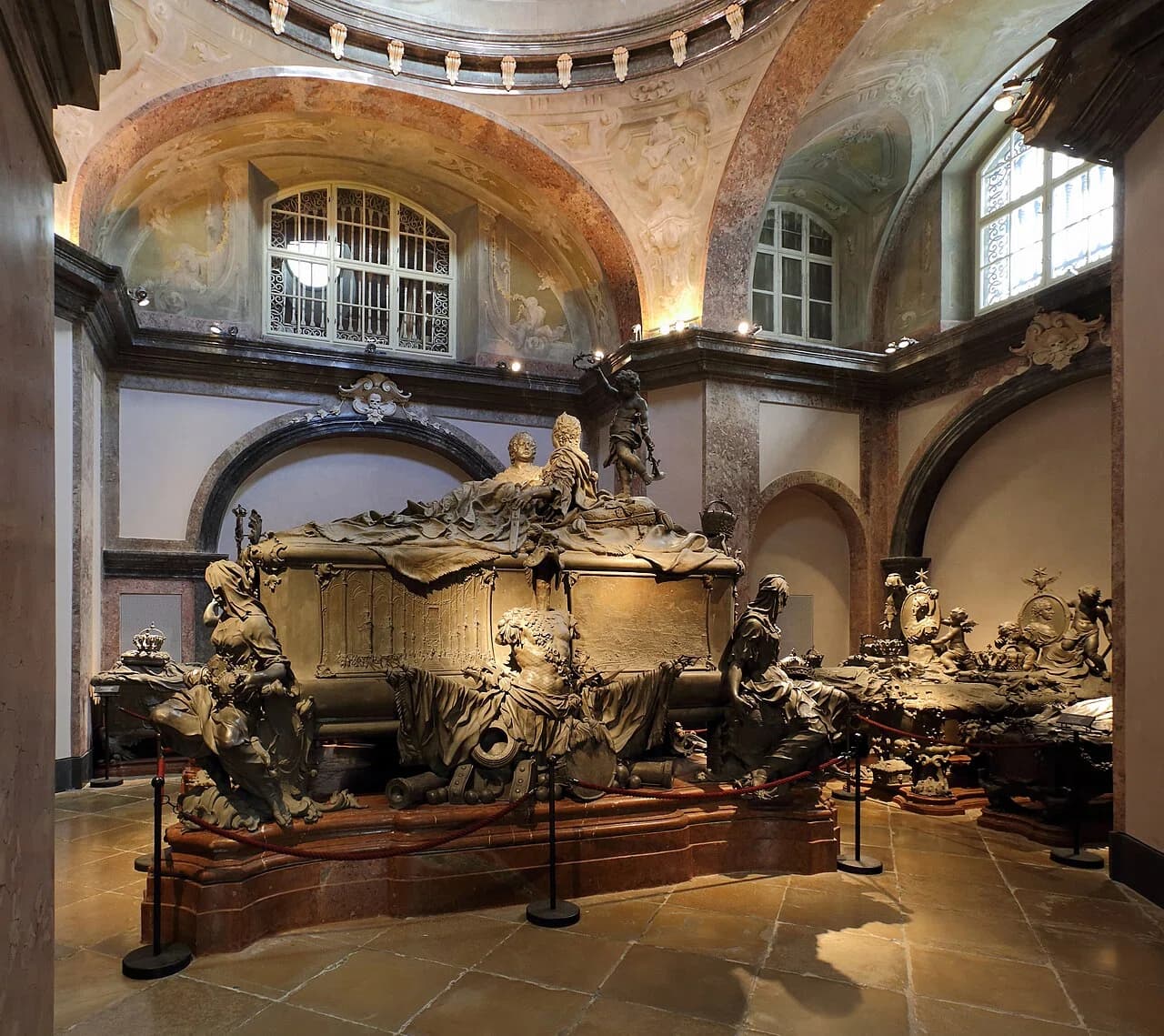
Kapuzinergruft
Wien, Innere Stadt

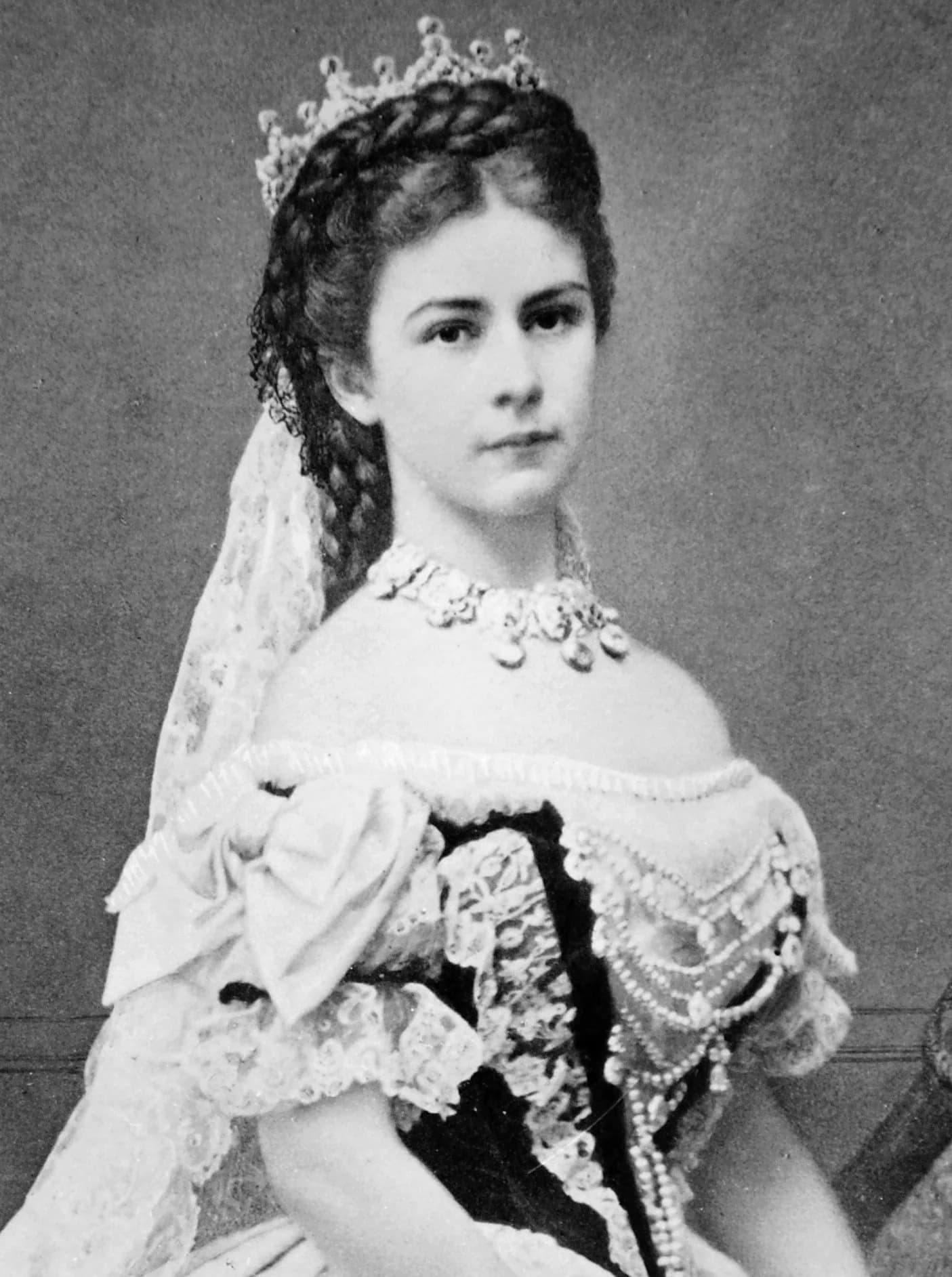
Empress of Austria and Queen of Hungary from 1854 to 1898
1 candle

Emoria lights a memorial candle in remembrance of Elisabeth von Österreich-Ungarn.
Emoria
September 10th, 2026
0 Entries
11 memories
🕯️ Anniversary of death

Archduke Franz Karl of Austria (1802-1878) and his family

Ida Ferenczy (3. von rechts) neben Kaiserin Elisabeth bei einer Bergtour

Hélène (à gauche) et sa soeur Sissi.

Elisabeth, Kaiserin von Österreich

Portrait of Empress Elisabeth of Austria (1837-1898)

Photograph of the empress Elisabeth (1837-1898)

Old portrait of Empress Elisabeth of Austria with her favourite dog Shadow

KaiserinElisabeth vonOesterreich(Naturaufnahme)

Photograph of Empress Elisabeth of Austria (1837–1898), the day of her coronation as Queen of Hungary.

Portrait of Empress Elisabeth of Austria (1837-1898)

Empress Elisabeth of Austria in Hungarian Coronation Dress
Elisabeth of Austria, born Duchess in Bavaria (born 24 December 1837 in Munich; died 10 September 1898 in Geneva), was Empress of Austria and Queen of Hungary for 44 years as the wife of Emperor Franz Joseph I. Known within her family as "Sisi", she became one of the most recognisable women in 19th-century European history – not through political power, but through a mixture of beauty culture, wanderlust, melancholy and a violent death that sealed her into legend.

Elisabeth grew up carefree in Munich and on Lake Starnberg, where her family had owned Possenhofen Castle since 1834. As the daughter of Duke Maximilian Joseph in Bavaria, she led an unusually free life for a noblewoman, spending much time outdoors, far from the strict etiquette of the great courts. According to tradition, it was originally her elder sister Helene who was intended to be matched with Emperor Franz Joseph at Bad Ischl in 1853; the emperor, however, fell in love with the fifteen-year-old Elisabeth instead.

On 24 April 1854 Elisabeth and Franz Joseph married at the Augustinian Church in Vienna. The young empress quickly found herself in a court life that remained foreign to her: her mother-in-law, Archduchess Sophie, controlled the upbringing and care of the children and left Elisabeth little say over how they were raised. Between 1855 and 1868 four children were born – Sophie, Gisela, Crown Prince Rudolf and, much later, Marie Valerie, the "Hungarian child", whom Elisabeth cared for more closely than her older children. Her first daughter, Sophie, died in 1857 at the age of two during a visit to Hungary, presumably of typhoid.

Unlike at the Viennese court, Elisabeth found affection and political support in Hungary. She campaigned energetically for the Austro-Hungarian Compromise and grew close to the Hungarian count Gyula Andrássy, who became one of her closest confidants. On 8 June 1867 Franz Joseph and Elisabeth were crowned King and Queen of Hungary at Matthias Church in Buda; the couple was subsequently given Gödöllő Castle, which Elisabeth loved for the rest of her life and where she could move more freely than in Vienna.
Elisabeth increasingly escaped the constraints of court ceremony through her body and through travel. At 1.72 metres tall, she kept her weight at around 50 kilograms through strict dieting; washing her ankle-length hair took a full day. She rode, exercised and undertook hikes lasting several hours, often well beyond what those around her found manageable. From 1860 she travelled extensively – to Madeira, Corfu, Asia Minor and North Africa – frequently under the pseudonym "Countess of Hohenembs" to escape public life. On Corfu she later had the Achilleion built, named after the Homeric hero Achilles, whose flight from the world she admired.

Within a few years, a series of heavy losses struck the ageing empress. On 30 January 1889 her only son, Crown Prince Rudolf, was found dead together with his lover Mary Vetsera at the hunting lodge of Mayerling. Elisabeth never fully recovered from the blow and wore almost exclusively black from then on. In the years that followed, her father, her sister Helene and her mother also died. She withdrew further and spent her final years largely travelling and visiting spa towns.
On 10 September 1898 Elisabeth left her Geneva hotel to cross by paddle steamer to Caux. On the lakeside promenade at the Quai du Mont-Blanc, the Italian anarchist Luigi Lucheni rushed at her and drove a sharpened needle file into her heart. The wound was so small that Elisabeth did not at first notice it; believing she had merely been struck, she thanked the bystanders who had rushed to help and boarded the ship. Only shortly after it cast off did she collapse. Asked by her lady-in-waiting whether she was in pain, Elisabeth is said to have answered "No." She died that same afternoon aboard the ship, aged 60. Lucheni had originally intended to assassinate a different nobleman and changed his target only when that man failed to arrive in Geneva as expected.
On 17 September 1898 Elisabeth was buried in the Imperial Crypt in Vienna, beside Franz Joseph and Crown Prince Rudolf. Her wish to be buried by the sea went unfulfilled. To this day she remains one of the most depicted and most written-about women in European history – a figure in whom the splendour of an empire meets the exhaustion of a woman who spent her life resisting the role into which she had been pushed at sixteen.
Elisabeth Amalie Eugenie wird als Tochter des Herzogs Max Joseph in Bayern und der Prinzessin Ludovika geboren.
Die Hochzeit findet in der Wiener Augustinerkirche statt. Elisabeth ist sechzehn Jahre alt.
In der Matthiaskirche in Ofen werden Franz Joseph und Elisabeth als König und Königin von Ungarn gekrönt.
Elisabeths einziger Sohn wird gemeinsam mit Mary Vetsera tot im Jagdschloss Mayerling aufgefunden. Elisabeth traegt fortan fast ausschliesslich Schwarz.
Elisabeth wird auf der Seepromenade von Genf von dem Anarchisten Luigi Lucheni mit einer Feile toedlich verletzt.
Elisabeth wird in Wien neben Franz Joseph und Kronprinz Rudolf beigesetzt.
No obituary has been uploaded for this memorial page yet. If you are one of the loved ones and would like to upload one, you can register as the owner of this memorial page and add it afterward.
Wien, Innere Stadt
Elisabeth von Österreich-Ungarn. Forever remembered.