
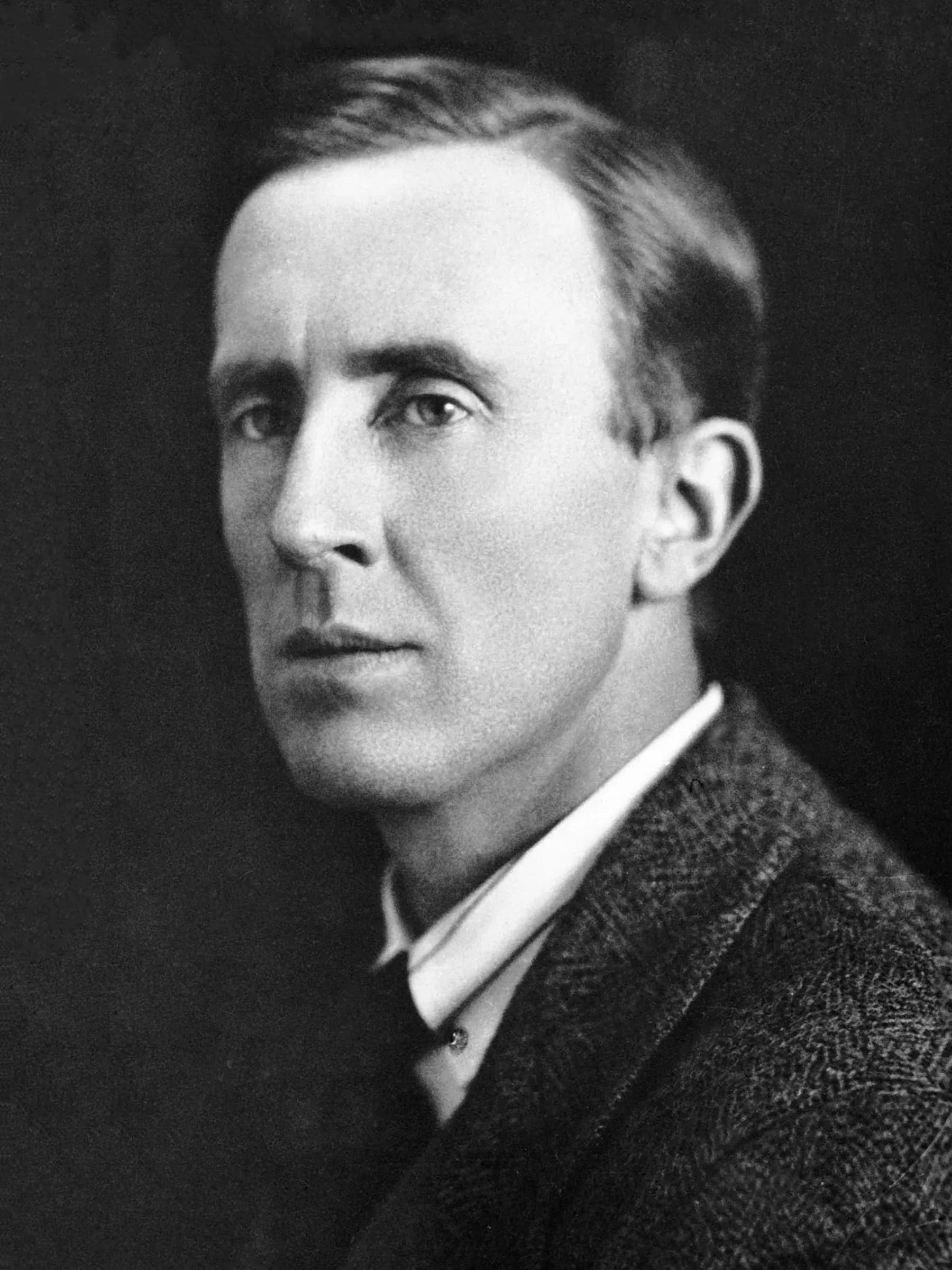
Memorial Page for J. R. R. Tolkien
English writer and philologist
Memorial Candles
1 candle

Emoria lights a memorial candle in remembrance of J. R. R. Tolkien.
Emoria
September 2nd, 2026
Condolence Book
0 Entries
Memories
10 memories
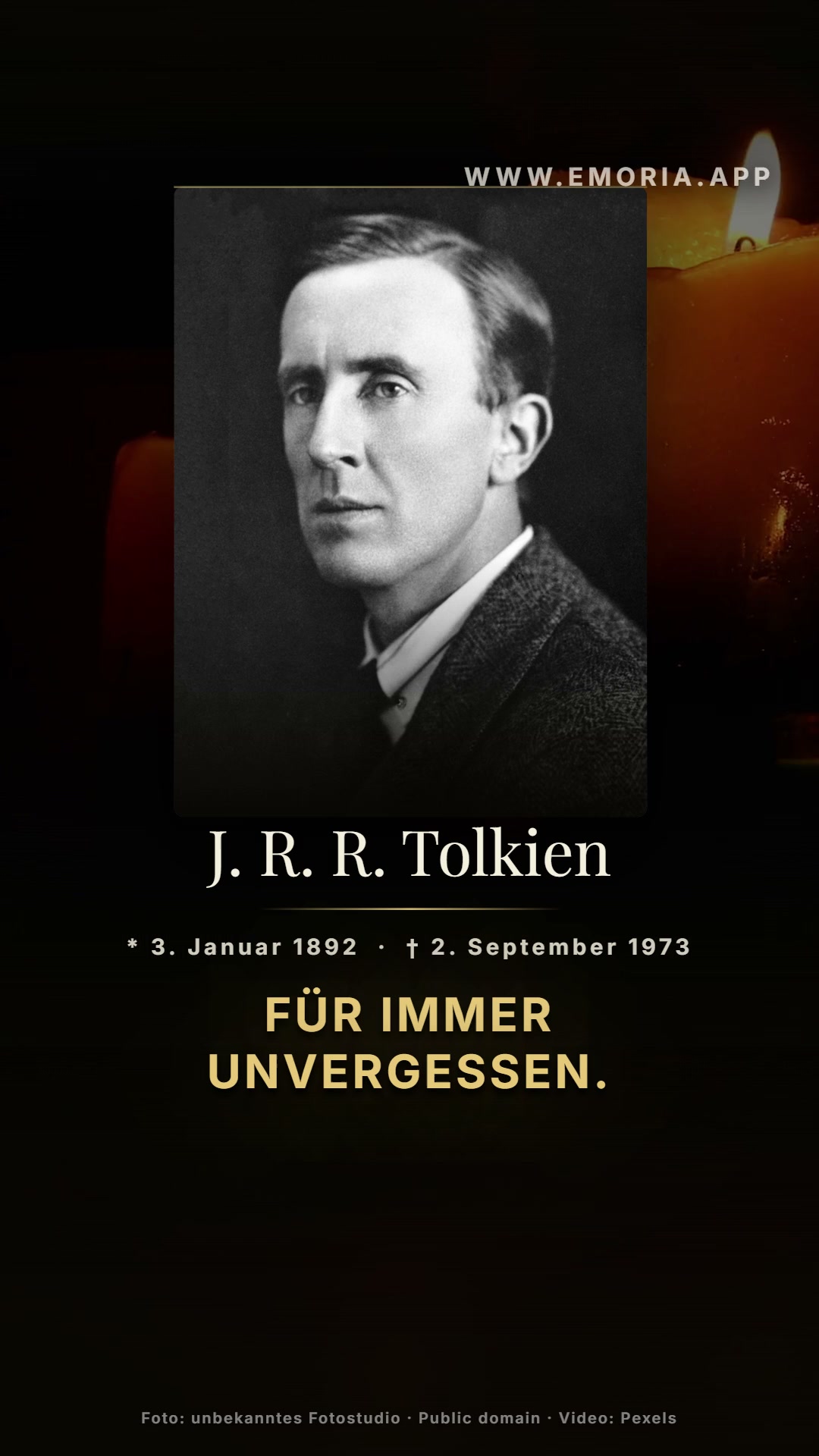
🕯️ Anniversary of death

Das gemeinsame Grabmal von J. R. R. und Edith Tolkien auf dem Wolvercote Cemetery in Oxford, mit den Namen Beren und Lút

20 Northmoor Road in Oxford, Tolkiens Zuhause von 1930 bis 1947, wo er den Hobbit und den Großteil des Herrn der Ringe s

Sarehole Mill in Birmingham, die Wassermühle nahe Tolkiens Kindheitszuhause, die später Vorbild für das Auenland wurde.

Picture of The Eagle and Child pub logo, in Oxford (England). Supposedly, J. R. R. Tolkien and C. S. Lewis met here.

Mabel Suffield Christmas Card

Log bench inscribed with 'Joy's Wood' next to birch grove and a ringfence of laid branches at Moseley Bog.

Bachelor of Letters Degree Oxford 1951, signed by J.R.R. Tolkien

The Eagle and Child, a pub in Oxford, England; photograph taken by MPerel, April 2002

Photo of the Lamb and Flag pub in Oxford, England.

76SandfieldRoad
Biography
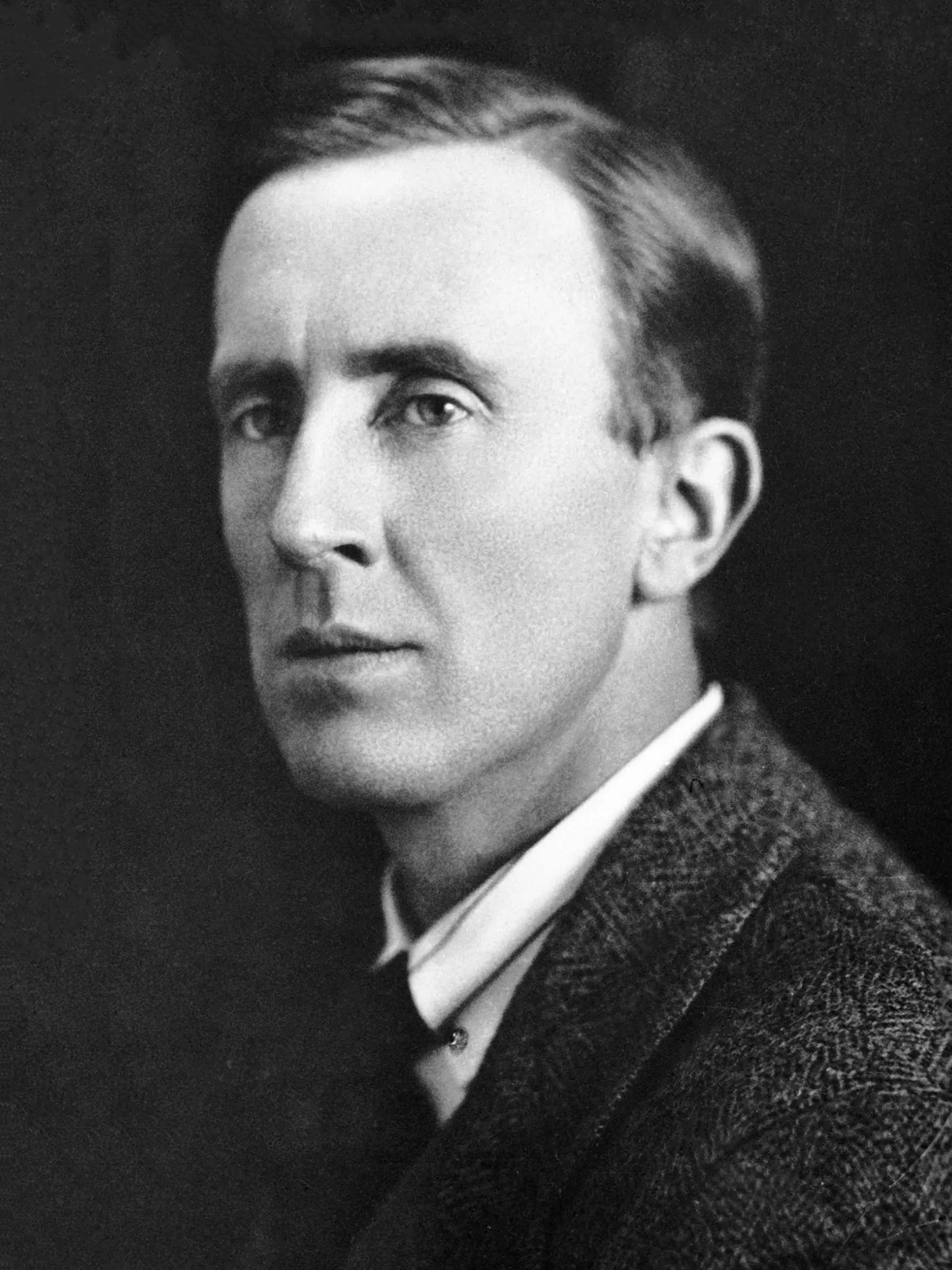
John Ronald Reuel Tolkien (born 3 January 1892 in Bloemfontein, Orange Free State; died 2 September 1973 in Bournemouth) was a British writer, philologist and university teacher of Old English. With The Hobbit and The Lord of the Rings he created a self-contained mythological body of work that founded modern fantasy literature and is still translated into dozens of languages today. His life moved between two very different worlds: the wide landscape of South Africa in his earliest childhood and the quiet academic Oxford where he spent most of his adult life.
Childhood in South Africa and Birmingham
Tolkien was born in Bloemfontein, where his father, bank clerk Arthur Reuel Tolkien, had moved for a position with the Bank of Africa; his mother was Mabel, née Suffield. In 1895 Mabel Tolkien returned to England with her two sons, John Ronald and Hilary, while their father stayed behind in South Africa for work. He died in Bloemfontein on 15 February 1896 from the effects of rheumatic fever, which brought on a severe haemorrhage. Ronald was four years old at the time and would never see South Africa again.

A year after their return, the family moved to Sarehole, then still a rural village south of Birmingham. The four years there left a lasting mark on Tolkien's imagination: he explored Sarehole Mill, nearby Moseley Bog and the Clent, Lickey and Malvern Hills, and visited his aunt Jane's farm, which was called Bag End – the name he later gave to Bilbo and Frodo Baggins's home. This rural idyll became the model for the Shire.

From 1900 the family moved several times within Birmingham, including to Moseley, King's Heath and Edgbaston. Tolkien briefly attended St Philip's Grammar School before returning to King Edward's School on a scholarship in 1903. On 14 November 1904 his mother died in Rednal after a six-day diabetic coma – a loss that marked the twelve-year-old for the rest of his life. He and his brother Hilary came into the care of Father Francis Morgan, a Catholic priest and family friend, who continued their upbringing in the Catholic faith Mabel Tolkien had adopted against her own family's opposition.
Edith, Oxford and the First World War
In 1908 the sixteen-year-old Tolkien met Edith Bratt, three years his senior. When his guardian learned of the relationship he forbade all contact until Tolkien came of age, fearing it would harm his schoolwork and his prospects. Tolkien complied until his twenty-first birthday, 3 January 1913, when he wrote to Edith again. She had since become engaged to another man; Tolkien persuaded her to break off the engagement. A year later, after Edith's conversion to Catholicism, they became formally engaged.
In December 1910 Tolkien won a scholarship to Exeter College, Oxford, beginning his studies in October 1911, first in Classics before switching to English Language and Literature. He graduated with First Class Honours in June 1915. On 22 March 1916 he married Edith at the Catholic church of St Mary Immaculate in Warwick, and that same year he was commissioned as a lieutenant in the Lancashire Fusiliers and sent to the Somme front in the summer. On 27 October 1916 he fell ill with trench fever and was shipped back to England on 8 November – an illness that probably saved his life: two of his closest friends from the T.C.B.S., the literary circle of his schooldays, Rob Gilson and G. B. Smith, were killed in the same battle. During his subsequent convalescence and home service, his first son, John Francis Reuel, was born on 16 November 1917.
Northmoor Road: The Hobbit and The Lord of the Rings take shape
After several further postings, Tolkien was discharged from active service in 1920 and that same year took up a post as Reader in English Language at the University of Leeds. In 1925 he returned to Oxford as Rawlinson and Bosworth Professor of Anglo-Saxon at Pembroke College, a post he held until 1945, when he moved to the Merton Professorship of English Language and Literature. These years also brought three more children: Michael (1920), Christopher (1924) and Priscilla (1929).
From 1930 to 1947 the family lived in a house at 20 Northmoor Road in Oxford. There, begun as a story for his own children, Tolkien wrote The Hobbit, which George Allen & Unwin published on 21 September 1937, illustrated with his own drawings and championed by the publisher's young son, Rayner Unwin. The first printing of 1,500 copies had sold out by mid-December that same year.

Encouraged by this success, Tolkien began a sequel in the late 1930s that was originally meant to be another children's book. Over the years of the Second World War it grew into The Lord of the Rings, a work of an entirely different scale and gravity. It was not published until 1954 and 1955, in three volumes: The Fellowship of the Ring (29 July 1954), The Two Towers (11 November 1954) and The Return of the King (20 October 1955). The description of the work as a "trilogy", still common today, stems from this publishing decision; Tolkien himself regarded it throughout his life as a single continuous novel. When the American publisher Ace Books issued an unauthorised paperback edition in 1964, an almost cult-like following grew among American students, which ultimately helped carry the book to worldwide success.
The Inklings
As early as 1926 Tolkien had founded the Oxford reading group "Kolbítar", devoted to Icelandic sagas read in the original. Out of this circle grew his close friendship with his colleague Clive Staples Lewis, who from 1927 also formed part of the informal discussion group known as the Inklings. On Tuesday mornings the group met for informal conversation at the pub The Eagle and Child; the actual readings took place on Thursday evenings in Lewis's rooms at Magdalen College. There Tolkien – and at times his son Christopher – read chapter after chapter of the emerging Lord of the Rings aloud, and the group became its first, consistently appreciative audience long before publication.

Alongside his fiction, Tolkien remained an influential philologist throughout his life. His 1925 edition of Sir Gawain and the Green Knight, prepared with E. V. Gordon, is regarded as an outstanding contribution to Middle English philology, and his 1936 lecture Beowulf: The Monsters and the Critics fundamentally changed how scholars have read the Old English epic ever since.
The Silmarillion and the later years
Alongside his published works, Tolkien spent his entire adult life on a far larger mythology he sought to gather under the title The Silmarillion. He was unable to complete it in his lifetime; his son Christopher Tolkien assembled it from his father's papers and brought it to posthumous publication in 1977. In 1966 Tolkien also translated the Book of Jonah for the Jerusalem Bible.
From 1953 to 1968 Tolkien and Edith lived at 76 Sandfield Road in the Oxford suburb of Headington. These were the years in which The Lord of the Rings appeared, and as the book's fame grew, so did the attention of admiring readers drawn to his home. Tolkien had retired in 1959; as fan interest increasingly disturbed their privacy, the couple moved in 1968 to a bungalow near Poole and Bournemouth on the south coast. In 1972 Queen Elizabeth II appointed him a Commander of the Order of the British Empire; he received the insignia at Buckingham Palace on 28 March that year. He never held a title of nobility.

Death and legacy
Edith Tolkien died on 29 November 1971 at the age of 82. Her husband then returned to Oxford, where Merton College made rooms available to him. In his final years he attempted a sequel to The Lord of the Rings titled The New Shadow, but abandoned it: a story set after Sauron's fall, he felt, could not be told with the same necessity.
Tolkien died on 2 September 1973, aged 81, in a private nursing home in Bournemouth, where he had returned for a short holiday; the cause of death was recorded as a bleeding ulcer and a chest infection. At the funeral his eldest son, John Francis Reuel, who had been ordained a Catholic priest in 1946, read the mass. Tolkien was buried beside Edith in the Catholic section of Wolvercote Cemetery in Oxford. Beneath their names, their shared gravestone bears the words Lúthien and Beren – the lovers from his own mythology, whose story remained bound up, for Tolkien, with his own marriage throughout his life.

Only in 2012 did it become known that C. S. Lewis had nominated his friend for the Nobel Prize in Literature in 1961; the jury chose Ivo Andrić instead. In 2013 Tolkien was inducted into the Science Fiction Hall of Fame, and since 2003 the Tolkien Society has marked 25 March as Tolkien Reading Day. His true legacy, however, lies not in honours but in how fundamentally The Hobbit and The Lord of the Rings shaped the very idea of what an invented world can be – one with its own history, its own languages and its own geography, still serving generations of readers and writers as a benchmark today.
Life Events
11 EventsGeboren in Bloemfontein
1892John Ronald Reuel Tolkien wird als Sohn des Bankangestellten Arthur Tolkien und seiner Frau Mabel in der suedafrikanischen Stadt Bloemfontein geboren.
Vater Arthur Tolkien stirbt in Bloemfontein
1896Er erliegt den Folgen eines rheumatischen Fiebers, waehrend seine Familie bereits nach England zurueckgekehrt ist.
Mutter Mabel Tolkien stirbt in Rednal
1904Sie erliegt ihrer Krankheit nach einem sechstaegigen diabetischen Koma. Ronald ist zwoelf Jahre alt.
Heirat mit Edith Bratt
1916Tolkien heiratet Edith Bratt in der katholischen Kirche St Mary Immaculate in Warwick, kurz bevor er an die Front der Somme-Schlacht geschickt wird.
Der Hobbit erscheint
1937George Allen and Unwin veroeffentlicht Der Hobbit mit Illustrationen von Tolkien selbst. Die erste Auflage von 1.500 Exemplaren ist bis Mitte Dezember vergriffen.
Die Gefaehrten erscheint
1954Der erste Band von Der Herr der Ringe wird veroeffentlicht.
Die zwei Tuerme erscheint
1954Der zweite Band von Der Herr der Ringe folgt wenige Monate spaeter.
Die Rueckkehr des Koenigs erscheint
1955Mit dem dritten Band ist Der Herr der Ringe vollstaendig veroeffentlicht.
Edith Tolkien stirbt
1971Tolkiens Frau Edith erliegt im Alter von 82 Jahren einer Krankheit. Er kehrt danach nach Oxford zurueck, wo ihm das Merton College Wohnraeume zur Verfuegung stellt.
CBE im Buckingham Palace
1972Koenigin Elisabeth II. hatte Tolkien den Rang eines Commander of the Order of the British Empire verliehen; die Insignien erhaelt er an diesem Tag im Buckingham Palace.
Gestorben in Bournemouth
1973Tolkien stirbt im Alter von 81 Jahren in einer Privatklinik in Bournemouth. Todesursache sind ein blutendes Magengeschwuer und eine Infektion der Atemwege.
Obituary
No obituary yet
No obituary has been uploaded for this memorial page yet. If you are one of the loved ones and would like to upload one, you can register as the owner of this memorial page and add it afterward.
Family Tree
- Edith Tolkien
- Arthur Reuel Tolkien
- Mabel Suffield
- Priscilla Tolkien
- Michael Tolkien
- Christopher Tolkien
- Hilary Tolkien
J. R. R. Tolkien. Forever remembered.