Ruhe in Frieden ❤️
August 27th, 2026
— katja he
Bekannte/r

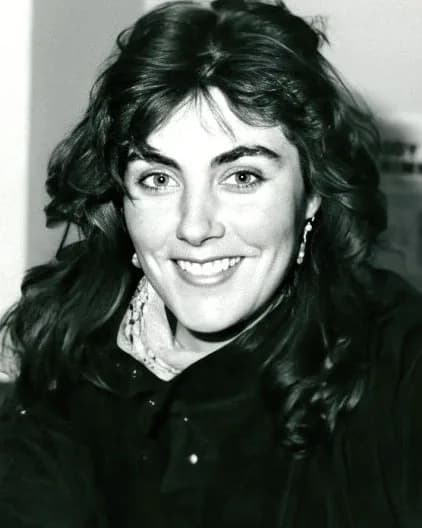
American singer and actress
8 candles

No message
Cornelia Schmittat 🖤🙏
September 5th, 2026

No message
Cathleen G.
September 1st, 2026
No message
Ludwig
September 1st, 2026

“R.I.P.”
Oliver
August 30th, 2026
No message
Sonja
August 27th, 2026
“RIP.Laura warst eine gute Sängerin.”
Rüdiger Scholz
August 27th, 2026

Emoria lights a memorial candle in remembrance of Laura Branigan.
Emoria
August 26th, 2026
Emoria lights a memorial candle for Laura Branigan's birthday.
Emoria
July 3rd, 2026
1 Entry
Ruhe in Frieden ❤️
August 27th, 2026
— katja he
Bekannte/r
5 memories
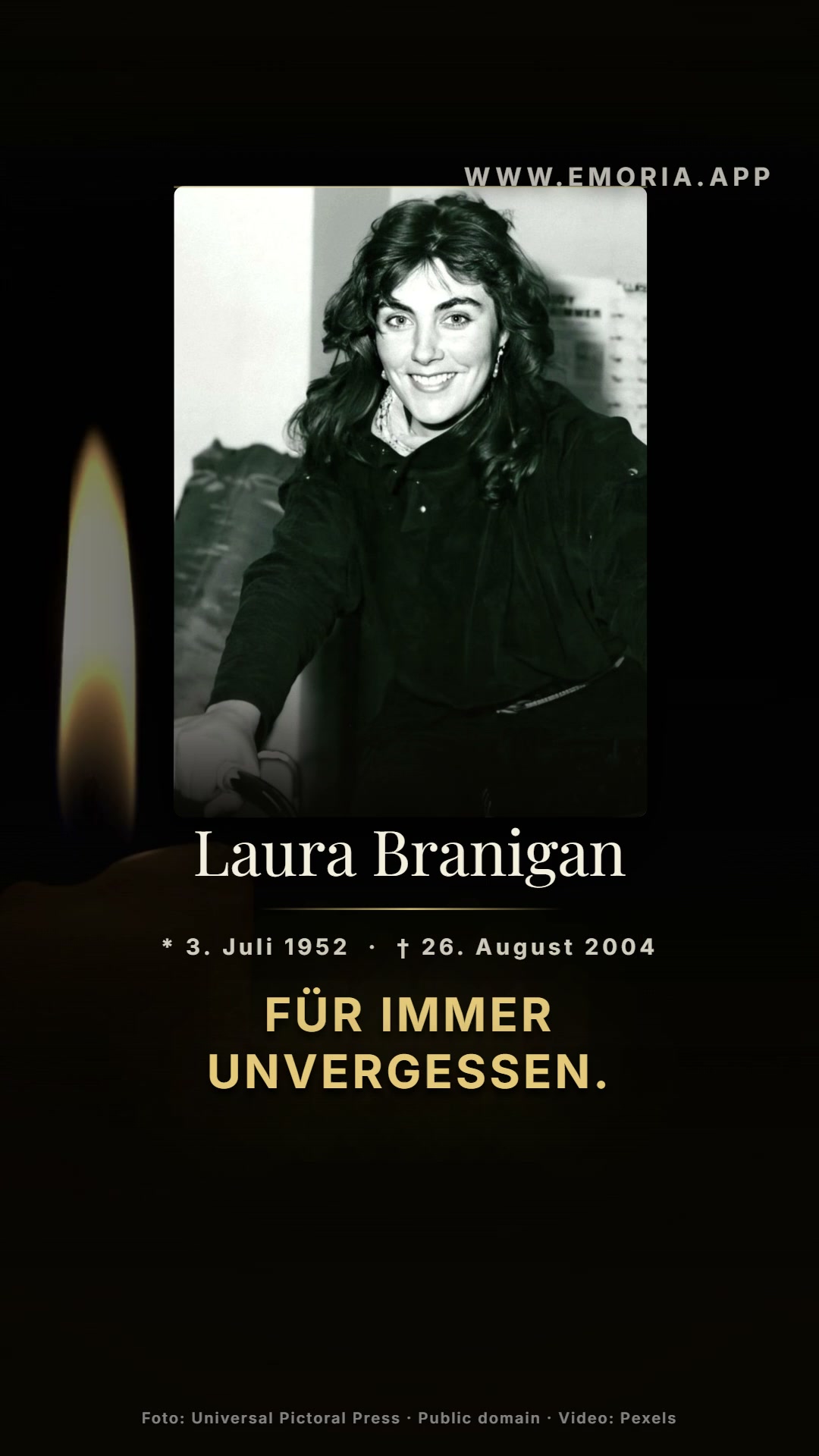
🕯️ Anniversary of death

Laura Branigans Unterschrift

Laura Branigan 1987, für die Presseunterlagen zum Album „Touch“

Das Etikett der amerikanischen 12-Inch-Single von „Gloria“, 1982

„All Night with Me“ – ihre erste Single bei Atlantic Records, 1982

Laura Branigan um 1982 – im Jahr, in dem „Gloria“ erschien
Laura Ann Branigan (born 3 July 1952 in Mount Kisco, New York; died 26 August 2004 in East Quogue, New York) was an American singer, songwriter and actress. Two of her songs, Gloria and Self Control, are among the best-known of the decade — in German-speaking Europe even more so than at home: Self Control was the best-selling single of 1984 in both Germany and Switzerland. She was 52 years old.
Laura Ann Branigan was born on 3 July 1952 in Mount Kisco, in the north of New York State, the fourth of five children of Irish American parents. Her father, James Branigan, was a mutual funds broker; her mother was Kathleen, née O’Hare. Laura grew up in Armonk, half an hour north of New York City, and attended Catholic school in nearby Chappaqua.
“I was real shy,” she said decades later about those years. When her parents separated, she withdrew further still. What opened her up was a school production: in her senior year at Byram Hills High School she landed the lead in the musical. “For the first time,” she remembered, “I felt I could really express myself.” She graduated in 1970.
After high school she moved to Manhattan and studied acting at the American Academy of Dramatic Arts. While still at school she formed the folk-rock group Meadow with Walker Daniels and Chris Van Cleave, singing and writing with them. The band’s only album, The Friend Ship, came out in 1973. Afterwards the group broke up.
In 1976 she toured Europe as a backing vocalist for Leonard Cohen. It was the last time she stood at the back of a stage. Once home in New York she knew she wanted to try it alone. In 1979 Ahmet Ertegün, the co-founder of Atlantic Records, signed her.
Her first album, Branigan, appeared in March 1982: nine tracks, produced by Jack White — a man from Cologne whose real name was Horst Nußbaum and whom the Atlantic executive Doug Morris had brought in for this record. The first single, All Night with Me, reached number 69 on the American charts and disappeared again. It did not look like a beginning that would hold.

The album’s second single did not come from America. Gloria had been released in Italy in 1979 by Umberto Tozzi, who wrote it with Giancarlo Bigazzi; it was recorded at the Union Studio in Munich. Greg Mathieson, who had arranged Tozzi’s recording and played keyboards on it, suggested to Jack White that Laura Branigan cut a new version. The Canadian Trevor Veitch wrote the English lyrics.
In the process everything shifted. Tozzi sings of a dream woman he misses like the air. In the version Laura Branigan recorded, one woman speaks to another who is close to breaking down — and asks whether the voices she is hearing are inside her own head.

Radio barely played the song at first. It caught on in the discos and moved into the charts from there, slowly, over months. On 27 November 1982 it stood at number two on the Billboard Hot 100, behind Lionel Richie’s Truly, and stayed there for three weeks. It never reached the top. What it did do was stay on the Hot 100 for 36 weeks — longer than any single by a solo female artist before it. In the United States the record was certified platinum; in the United Kingdom it reached number six.
In Germany, Gloria did not chart at all in 1982. Germany would discover her two years later, with a different song.
On 23 February 1983 Laura Branigan was nominated at the 25th Grammy Awards in Los Angeles for Best Pop Vocal Performance, Female. The award went to Melissa Manchester. It was one of only two Grammy nominations of her life.
Gloria never let go of her after that. “I have to end every show with Gloria,” she said twenty years on. “The whole room is just screaming.”

Branigan 2 followed in 1983. Solitaire, originally by the French singer Martine Clémenceau, reached number seven in the United States; the English lyrics were by Diane Warren, and they were her first major success. The second single, How Am I Supposed to Live Without You, topped the American Adult Contemporary chart. The song had been intended for other performers; because its co-writer Michael Bolton refused to let the chorus be rewritten, it went unrecorded — until Laura Branigan sang it exactly as written. It was Bolton’s first major hit too; his own version topped the American charts seven years later.
That same year her voice was heard twice in the film Flashdance, with Imagination and again with Gloria. The soundtrack was nominated for the Album of the Year Grammy — shared with everyone involved, this was her second nomination. In 1984 she sang Hot Night for Ghostbusters.
Self Control was released on 19 April 1984. Giancarlo Bigazzi, Steve Piccolo and the Italian singer Raf had written it and, through their publisher, had offered it to Laura Branigan first. So it happened that two versions of the same song appeared in 1984: hers, recorded by Jack White and Robbie Buchanan in West Germany and Los Angeles with Harold Faltermeyer among the arrangers — and, shortly afterwards, Raf’s own. Raf initially faced accusations of plagiarism; the writing credits on her record cleared that up quickly.
In May both versions stood in the German top 20. On 25 June 1984 Laura Branigan’s Self Control reached number one in Germany — and stayed there for six weeks, with Raf holding number two. By the end of the year it was the best-selling single of 1984 in Germany and in Switzerland. It also reached number one in Austria and Switzerland, number four in the United States and number five in the United Kingdom. In Germany it was certified gold for 250,000 copies sold.
Another song from the same album, The Lucky One, won her the grand prize at the 13th Tokyo Music Festival in 1984; released as a single, it reached number 20 in the United States and number 33 in Germany.
The music video was directed by William Friedkin, who had made The French Connection and The Exorcist. She was one of the first artists of the video era to have an Academy Award winner direct her video. It was filmed in New Jersey and New York and first aired in April 1984. MTV asked for changes before it would show the video; Branigan resisted, then let her record company persuade her to make one small alteration. In 1985 the video brought her an American Music Award nomination as favourite female video artist; the award went to Cyndi Lauper.
Alongside the music she kept appearing in front of the camera as an actress: guest roles in the television series CHiPs, Automan and Monsters, and parts in the films Mugsy’s Girls and Backstage.
On 27 April 1984 she sang for the first time on Johnny Carson’s Tonight Show; that June she appeared on Dick Clark’s American Bandstand. And on 21 September 1985 she performed Spanish Eddie on the German television show Wetten, dass..?, broadcast from Basel — the single reached number eight in Austria and number 36 in Germany.
The album Touch came out on 7 July 1987 and returned her to the American top 40 with a cover of Jennifer Rush’s The Power of Love. Shattered Glass played in the American dance clubs and charted once more in Germany and Switzerland as well.
That song took her back to Dick Clark once more, and it turned into a particular evening: on 5 September 1987, after thirty years, the very last episode of American Bandstand on ABC went out. The guest was Laura Branigan with Shattered Glass. Clark’s farewell to his audience opened with thanks to her.

The album Laura Branigan appeared in 1990. For the first time she co-produced, among others her own version of Turn the Beat Around. The tour opened with an appearance on Johnny Carson’s show. Over My Heart, her seventh and last studio album, followed in 1993; her younger brother William, whom everyone called Billy, worked on it as co-producer, guitarist and bassist and wrote the track Over You with her. In 1994 she sang the duet I Believe with David Hasselhoff for the soundtrack of the television series Baywatch.
She had met her husband at a party in Manhattan; they married nine months later. Lawrence Kruteck was a New York lawyer, considerably older than she was and, as she put it, “not at all threatened” by her career. When she was not on tour they stayed home. “I’d cook. We’d rent movies,” she remembered. “We were just great friends.”
In 1994 doctors found colon cancer. Laura Branigan stopped working and nursed him for two years, until he died in 1996. She said of it later: “That’s what I lived for. It was not even a choice.”
After his death she all but disappeared. For five years she gave only the occasional concert and spent her time alone or with close friends. About grief she found a sentence that many who have lost someone will recognise: “It’s something you never really get over, but you put it in a place inside you and deal with it in the way you have to.”
In early 2001 she went back into the studio. That June she fell ten feet from a ladder outside her house while hanging wisteria and broke both her femurs. Six months of physical therapy followed; rods and pins stayed in both legs. She carried on. In 2002 she appeared in the off-Broadway musical Love, Janis as Janis Joplin.
In 2004 Self Control 2004 and Gloria 2004 were released, new recordings of her two best-known songs for which she had gone back into the studio. She was giving concerts, working on new recordings, further shows were already booked — and she was writing a cookbook.
On 26 August 2004 Laura Branigan died in her sleep at her home in East Quogue on Long Island. The cause was a cerebral aneurysm that no one had known about. Her brother Mark said she had complained to a friend of headaches for around two weeks but had not sought medical attention. She was 52 years old.
She was cremated, and her ashes were scattered over Long Island Sound. She left her mother, two brothers and a sister.
Two days after her death the Associated Press ran an obituary based on information from her management company. It said that Laura Branigan had been 47 years old and born in 1957. That figure travelled into newspapers, reference works and databases, and stood there for twelve years.
Then a fan wrote to the agency. The AP checked school records, newspaper articles from the 1950s and 1960s and accounts from people who had grown up with her, and on 16 December 2016 published a correction: born 3 July 1952, died at 52. Further corrections followed in early 2017. Gloria had been on the charts for 36 weeks, not at the top of them for that long. Two Grammy nominations, not four. Signed with Atlantic in 1979, not 1982. And she had grown up in Armonk, not Brewster.
It took one person who cared enough about this singer to ask again twelve years later, so that her life would be recorded correctly.
In January 2019 a few ice hockey players from the St. Louis Blues were sitting in a bar in Philadelphia when Gloria came on. They made the song their victory anthem. Eleven straight wins followed — a franchise record — and on 12 June 2019 the first Stanley Cup in the club’s history. In St. Louis that night two bands, Phish and Vampire Weekend, played Gloria for the city.
The song returned to the American charts and climbed to number three on the iTunes singles chart. Her estate received so many requests for live appearances that it had to remind the public publicly that Laura Branigan had been dead for fifteen years. On the Champions Walk at the Enterprise Center in St. Louis, a permanent marker has commemorated the song ever since.
At Byram Hills High School in Armonk the Laura Branigan Memorial Scholarship is awarded every year to a graduating student for excellence in the performing arts. It is given at the same school where, in her final year, she was cast in the lead of the musical.
What she was after, she put most simply herself, two years before her death: “Everybody’s been through love and pain in their lives, and that’s what music is about.”

Laura Ann Branigan kommt in Mount Kisco, New York, als viertes von fünf Kindern irisch-amerikanischer Eltern zur Welt. Aufgewachsen ist sie im nahen Armonk.
Die Single steht auf Platz zwei der Billboard Hot 100 und hält sich dort drei Wochen. Insgesamt bleibt sie 36 Wochen in der Liste.
Bei der 25. Verleihung in Los Angeles ist sie mit Gloria für die beste weibliche Popgesangsdarbietung nominiert. Der Preis geht an Melissa Manchester.
Die Single zum gleichnamigen dritten Album kommt heraus. Aufgenommen haben sie Jack White und Robbie Buchanan in der Bundesrepublik und in Los Angeles.
In der Sendung von Johnny Carson singt sie Self Control.
Self Control steht an der Spitze der deutschen Singlecharts und bleibt dort sechs Wochen, während sich Rafs eigene Fassung auf Platz zwei hält.
In der Sendung aus Basel singt sie Spanish Eddie.
Mit der Coverversion von The Power of Love kehrt sie in die amerikanischen Top 40 zurück.
Nach dreißig Jahren endet die Sendung beim Sender ABC. Laura Branigan ist der Gast und singt Shattered Glass; Dick Clarks Abschiedsworte beginnen mit einem Dank an sie.
Erstmals produziert sie eigene Aufnahmen mit, darunter ihre Fassung von Turn the Beat Around.
Ihre siebte und letzte Studioplatte. Ihr Bruder Billy ist als Koproduzent, Gitarrist und Bassist beteiligt und schreibt mit ihr das Stück Over You.
Laura Branigan stirbt mit 52 Jahren im Schlaf in ihrem Haus auf Long Island. Ihre Asche wird im Long Island Sound verstreut.
Nach dem Hinweis eines Fans stellt die Agentur richtig, dass Laura Branigan 1952 geboren wurde und mit 52 Jahren starb, nicht mit 47.
Die St. Louis Blues gewinnen mit ihrem Lied als Siegeshymne den ersten Stanley Cup der Vereinsgeschichte.
No obituary has been uploaded for this memorial page yet. If you are one of the loved ones and would like to upload one, you can register as the owner of this memorial page and add it afterward.
Laura Branigan (née Laura Ann Branigan). Forever remembered.